
Oak & Hickory Tree Care Tips for Springfield, MO
Table of Contents
ToggleIf you own property in Springfield, Missouri, chances are you have at least one oak or hickory tree on your lot. These hardwoods are the backbone of the Ozarks landscape — providing decades of shade, shelter, and serious curb appeal. Red oaks, white oaks, black oaks, and shagbark hickories are everywhere in Greene County, and for good reason: they’re tough, long-lived, and beautiful.
But “tough” doesn’t mean invincible. Springfield’s oaks and hickories face a specific set of threats that most homeowners don’t know about until a tree is already in serious trouble. Oak wilt is one of the most destructive tree diseases in Missouri, capable of killing a red oak within a single season. The two-lined chestnut borer targets stressed oaks across the Ozarks and can silently kill a tree from the crown down over two to three years. And poor pruning practices — especially cuts made at the wrong time of year — can actually invite both.
This guide breaks down exactly what Springfield and surrounding area homeowners need to know to protect their oaks and hickories, catch problems early, and decide when it’s time to call a professional.
What Oak and Hickory Species Grow in Springfield, Missouri?
Understanding what’s growing on your property is the first step in caring for it properly. Springfield and the surrounding Ozarks region is home to several native oak and hickory species, each with slightly different care needs and vulnerabilities.
| Species | Key Traits | Main Risk |
| Red Oak (Quercus rubra) | Fast-growing, pointed leaf lobes, common in yards | Highly susceptible to oak wilt — can die within weeks of infection |
| Black Oak (Quercus velutina) | Similar to red oak, dark bark, common in Ozarks | Oak wilt and two-lined chestnut borer |
| White Oak (Quercus alba) | Round-lobed leaves, slower-growing, more disease-resistant | More resilient but still vulnerable to borer and drought stress |
| Post Oak (Quercus stellata) | Distinctive cross-shaped leaf, common on rocky soils | Post Oak Decline — widespread across the Ozarks plateau |
| Shagbark Hickory (Carya ovata) | Distinctive shaggy bark, produces edible nuts | Borers and drought stress; less susceptible to oak wilt |
| Bitternut Hickory (Carya cordiformis) | Smooth gray bark, yellow buds, common in lowlands | Canker and drought stress in dry Springfield summers |
Oak Wilt in Springfield, MO — The Disease That Can Kill a Red Oak in Weeks
The two-lined chestnut borer (Agrilus bilineatus) is a native beetle that targets oaks across the Ozarks — but here’s the critical thing to understand: it almost exclusively attacks trees that are already under stress. Drought, soil compaction from construction, root damage, storm injury, or a previous disease can all weaken a tree enough to make it a target. A genuinely healthy, well-watered oak will typically fend off borer activity on its own.
That said, the Springfield area has seen periods of drought stress in recent years, and urban soils around foundations, driveways, and construction sites are chronically compacted — both of which create exactly the conditions borers love.
How Oak Wilt Spreads
The disease spreads in two main ways. First, sap-feeding beetles carry fungal spores from infected trees to fresh wounds on healthy ones during the active growing season. This is why pruning cuts made in spring are so dangerous — an open wound during beetle season is essentially an open invitation. Second, oak wilt can move underground through root grafts between neighboring trees of the same species, meaning a single infected tree can spread the disease to adjacent oaks without any insect involvement at all.
Warning Signs of Oak Wilt
- Leaf wilting and browning that starts at the top of the canopy and moves downward
- Leaves turning a dull bronze or olive-brown color, starting at the outer margins and working toward the base
- Rapid, unexpected leaf drop — sometimes mid-summer, while leaves are still partially green
- Dark streaking visible under the bark of affected branches when peeled back
- In red oaks: death can occur within two to six weeks of visible symptoms appearing
One important distinction: oak wilt is often confused with oak decline, which progresses over multiple years. With oak wilt, the deterioration is rapid and devastating, particularly in red oaks. White oaks tend to show symptoms more slowly over several seasons.
What You Can (and Can’t) Do About Oak Wilt
Once a red oak is showing extensive crown wilt symptoms, the tree generally cannot be saved. However, early intervention can protect nearby healthy oaks. A certified arborist can inject fungicide to protect uninfected trees and may recommend mechanical trenching to sever root grafts between infected and healthy neighbors.
⚠️ The #1 Rule for Springfield Oak Owners
Never prune your oaks between mid-March and the end of June. This is the peak window when sap beetles are active and can carry oak wilt spores directly into fresh pruning cuts. If you must make a cut during this period due to storm damage or an emergency, paint the wound immediately with a commercial tree wound dressing — available at garden centers — before beetles can reach it.
Get in Touch
Get Your Estimate Today!
We are Springfield’s most committed Tree Removal Company in Springfield, MO.
Bringing our unparalleled service to your workplace or home!
Two-Lined Chestnut Borer — The Ozarks’ Silent Oak Killer
The two-lined chestnut borer (Agrilus bilineatus) is a native beetle that targets oaks across the Ozarks — but here’s the critical thing to understand: it almost exclusively attacks trees that are already under stress. Drought, soil compaction from construction, root damage, storm injury, or a previous disease can all weaken a tree enough to make it a target. A genuinely healthy, well-watered oak will typically fend off borer activity on its own.
That said, the Springfield area has seen periods of drought stress in recent years, and urban soils around foundations, driveways, and construction sites are chronically compacted — both of which create exactly the conditions borers love.
How to Identify a Borer Infestation
- Dieback starting in the upper canopy and moving progressively downward over one to three seasons
- Leaves on affected branches turning uniformly brown and remaining attached to dead branches rather than falling
- Small D-shaped exit holes (about 1/8 inch wide) punched through the outer bark — a sign adult beetles have emerged
- Irregular, winding galleries carved into the wood just beneath the bark, visible if you peel a section away
- A distinct pattern of dead and living branches on the same tree
Prevention Is Everything
Once borer damage is visible in a branch, that branch is already dead and cannot be saved. The focus must shift to protecting the rest of the tree. Prevention through tree health is far more effective than any treatment after the fact:
- Water deeply: during dry spells, aim for about one inch of water per week at the drip line, not just at the base
- Mulch generously: 2 to 4 inches of wood chips or shredded bark extending to the drip line retains moisture and regulates soil temperature
- Avoid soil compaction: keep construction equipment, vehicles, and heavy foot traffic away from the root zone
- Remove infested wood promptly: dispose of or chip borer-infested branches before adult beetles emerge in late spring
- Consider preventive treatment: for high-value or already-stressed oaks, a licensed arborist can apply systemic insecticide treatments before borer activity begins
Best Pruning Practices for Oaks and Hickories in Springfield, Missouri
Proper pruning is one of the single most valuable things you can do for your oaks and hickories. It removes dead and structurally weak wood, improves airflow through the canopy, reduces storm damage risk, and — when done correctly — actually strengthens a tree’s long-term health. Improper pruning does the opposite.
When to Prune Missouri Oaks and Hickories
The safest window for pruning oaks in the Springfield area is late fall through early winter — roughly November through February. During this dormant period, sap-feeding beetles are not active, so fresh cuts won’t attract insects carrying oak wilt spores. Hickories can also be pruned in this window, though they are less vulnerable to the specific oak wilt risk.
Avoid pruning from mid-March through June entirely if possible. If a storm forces emergency work during this period, seal every cut immediately with wound dressing.
What to Prune vs. What to Leave Alone
- Remove dead, dying, and broken branches: these harbor disease and create falling hazards
- Remove branches with tight V-shaped crotches: these are weak unions prone to splitting in storms
- Crown raise: lifting the lower canopy improves clearance and airflow
- Never “top” an oak or hickory: removing the upper crown destroys the tree’s structure, creates massive decay entry points, and generates weak regrowth that is far more likely to fail in the next storm
- Avoid removing more than 25% of the canopy in any single season: excessive removal stresses the tree and can trigger borer activity
A note on ‘tree topping’ in Springfield
We occasionally see homeowners or budget contractors topping oaks to “reduce their size.” This practice is widely condemned by arborists and actually shortens a tree’s life significantly. Topped oaks grow back with fast, weakly attached sprouts and become more hazardous, not less. If a tree is too large for its location, removal and replanting with an appropriate species is a better long-term answer.
Hickory Tree Care in Springfield — Don’t Overlook These Hardwoods
Hickories tend to get less attention than oaks in the tree care conversation, but they’re equally valuable to Springfield landscapes and have their own maintenance needs. Shagbark and bitternut hickories are both common in Greene County and surrounding areas.
Hickories are generally more drought-tolerant than oaks once established, but young or recently planted hickories need consistent watering during their first three to five years. Their deep root systems make transplanting difficult, so proper site selection at planting time matters enormously.
The main threats to Springfield hickories are drought-induced stress (which opens the door to borers and canker fungi), soil compaction in urban settings, and storm damage to their characteristically tall, narrow crowns. Annual inspections to identify dead wood and structurally compromised branches are the best maintenance investment you can make for a hickory on your property.
When to Call a Professional Tree Service in Springfield, MO
Some tree care tasks — watering, mulching, monitoring — are genuinely DIY-friendly. But several situations call for a licensed, experienced tree service rather than a ladder and a hand saw:
- Any work above 10 feet off the ground: falls from trees cause serious injuries every year
- Suspected oak wilt: proper diagnosis, fungicide injection, and root graft disruption require professional equipment and expertise
- Visible borer damage: a certified arborist can assess how far infestation has progressed and whether the tree can be saved
- Large dead branches over your home, driveway, or fence: these need to be rigged down carefully, not just dropped
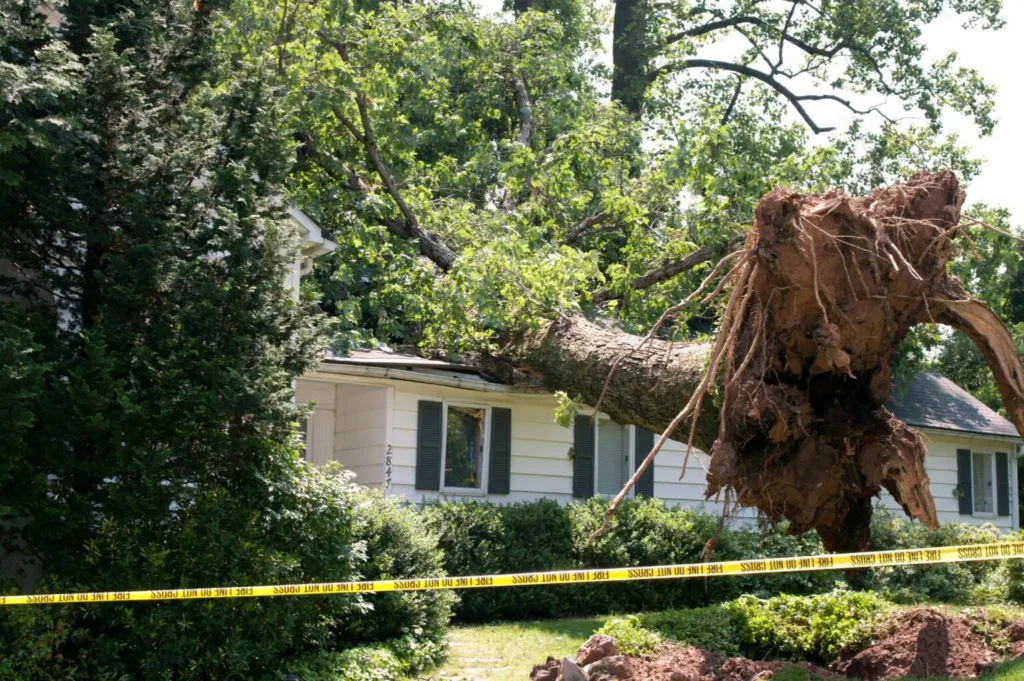
- Any tree that is leaning, has raised roots, or has visible trunk decay: these are structural emergencies
- Storm damage that involves hanging or partially broken limbs: these are among the most dangerous conditions in tree work
T&F Tree Service has been serving Springfield, Nixa, Ozark, Republic, Willard, and surrounding communities for 16 years. Our team handles everything from routine oak trimming to full emergency removal, and we’re available 24/7 for urgent situations. We offer free estimates on all services with no pressure and no hidden fees.
Worried about an oak or hickory on your Springfield property?
Whether you’re seeing suspicious leaf drop, branch dieback, or just want a professional opinion before the next storm season, T&F Tree Service is ready to help. Call or text us any time for a free assessment.
📞 Call or Text: 417-501-0822 — Available 24/7
springfieldtreeremoval.com • Serving Springfield, Nixa, Ozark, Republic, Willard & Battlefield • Free Estimates
Your oaks and hickories are among the longest-lived features of your property. A red oak planted in a Springfield yard today could still be standing 150 years from now — or it could be gone in a single season if oak wilt is mismanaged or a borer infestation goes unaddressed. The difference comes down to knowledge, timing, and knowing when to call someone who does this every day.
T&F Tree Service is your local Springfield expert for oak trimming, disease assessment, emergency removal, and everything in between. Call us at 417-501-0822 — we’re proud to serve the Queen City of the Ozarks.